For California HMO & Medi-Cal members
Your insurance directory is full of ghosts.
We find out who's actually taking patients. If nobody can see you in time, we build the evidence to make your plan fix it.
It's free, and you don't need an account. We never ask for your name or health details, and nobody gets called until you say so.
From our live test run: of 90 licensed therapists near 92103 (Hillcrest, San Diego), 4 appear to be ghosts.
A provider your plan lists as taking new patients, who can't actually see you.
Built on public sources: California Health & Safety Code §1367.03, the national NPI registry, and the DMHC grievance process. GhostBuster is an independent student project and isn't affiliated with any agency or health plan.
Finding a therapist who takes your insurance shouldn't be a second job.
“A study published last month called almost six thousand therapists and psychiatrists listed in insurer directories. About one call in eight ended with an appointment option.”
The directory says yes.
Your health plan publishes a directory of in-network providers. Search for a therapist near you and it hands back a long, reassuring list.
The phone says no.
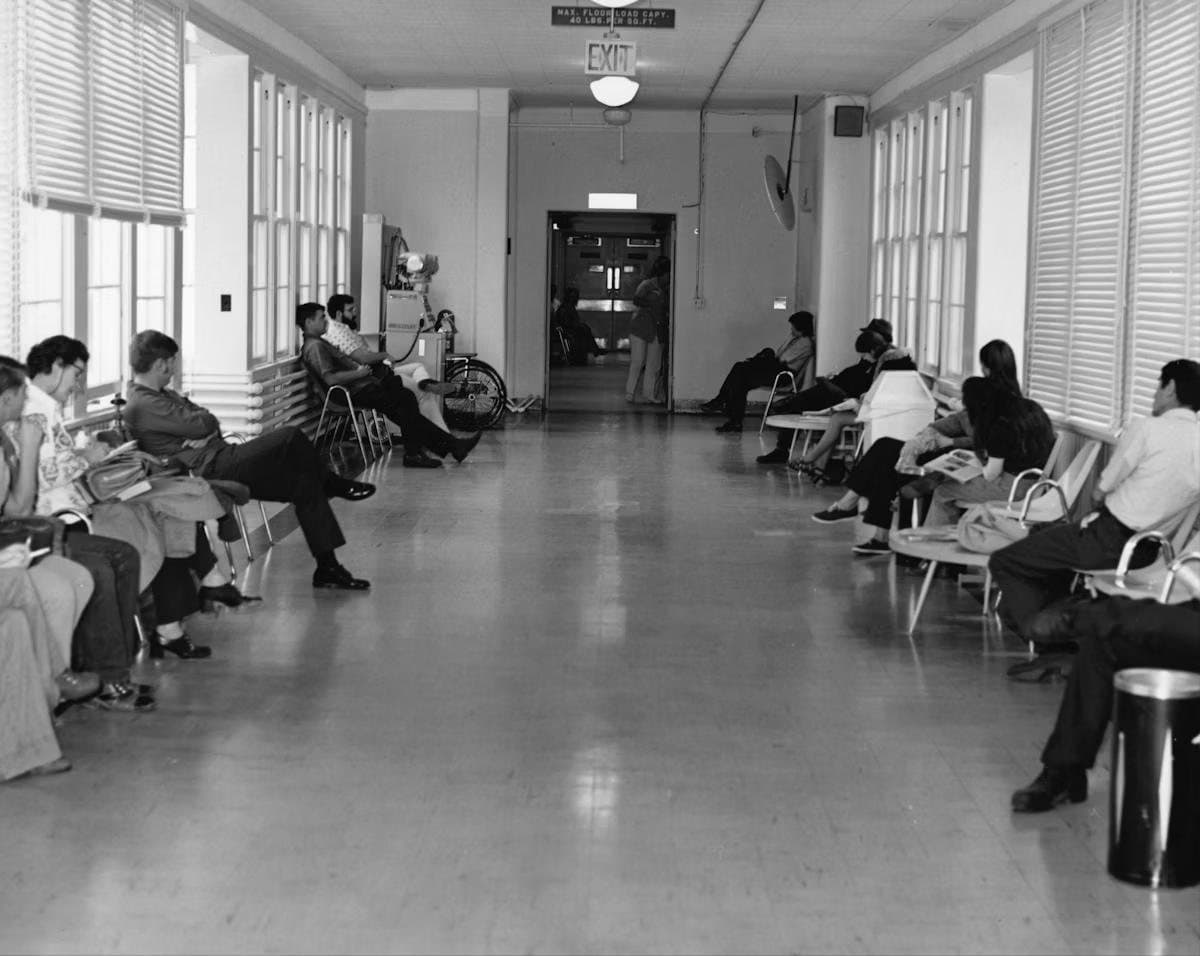
Then you start calling. One office stopped taking new patients. One moved away. One number is disconnected. One never calls back. These are ghost listings, and you find out one call at a time.

The law is on your side.
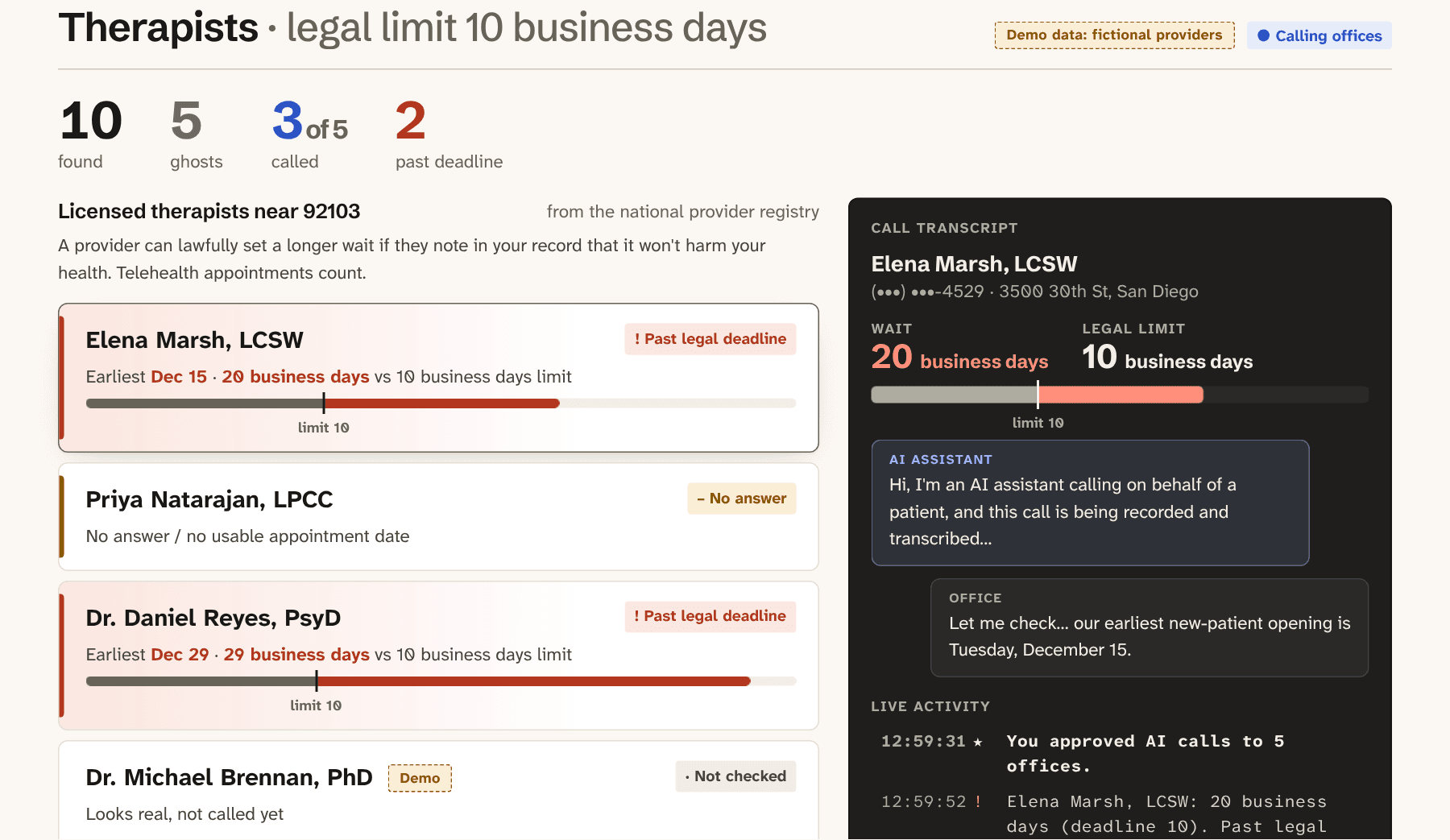
California's timely-access rules set deadlines for state-regulated plans: 10 business days for a therapist or primary care appointment, 15 for a specialist, 48 hours for urgent care that needs no prior authorization. When a plan can't offer an appointment in time, it has to arrange one for you, including out of network.
Earliest opening offered: day 29
But the proof is on you.
To use those rules, you need to show the plan failed: who you called, when, and what they said. GhostBuster does that legwork for you and writes it down.

We make the calls. You keep the receipts.
One search. About a minute of your time. Either an appointment you can actually get, or the paperwork that makes your plan find you one.
- 1
Check providers near you
We pull licensed providers near you from the national provider registry, then use Bright Data to check each one's public profile.
- 2
Call the rest for you
With your OK, an AI assistant calls each office and asks for the earliest new-patient opening. It says it's an AI in its first sentence.
- 3
Hold the plan to the law
California sets appointment deadlines. If nobody meets them, you get an evidence packet.

If someone can see you
We show you who, when, and the number to call to book.
If nobody can in time
You get the call log, a letter to your plan, a phone script, and how to reach the regulator.
Honest about what it is, and what it isn't.
It says it's an AI.
The assistant opens every call by saying it is an AI assistant calling on behalf of a patient. It never shares your name or health details.
It's evidence, not legal advice.
You get a call log and letter templates to send to your plan. What you do with them is your call.
Not every plan is covered.
The deadlines apply to state-regulated California plans. Self-funded employer plans and Medicare follow federal rules instead.
This is a hackathon demo.
Built in a weekend at SanD Hacks. In the demo, calls only go to our own team's phones, never to a real office.
Built by four UC San Diego students at SanD Hacks, Fall 2026.




Common questions
Will you call anyone without asking me?
No. Calls only start after you approve them on the results page. You'll see exactly which offices will be called first.
What does the AI say on the phone?
It says it's an AI assistant calling on behalf of a patient and that the call is being transcribed, then asks only for the earliest opening, in person or by telehealth. It doesn't share your name, contact info, or health details.
Is this legal advice?
No. You get an evidence log and letter templates, not legal advice. What you do with them is your call.
Does this work for my plan?
California's deadlines apply to state-regulated coverage. They don't apply to self-funded employer or union plans, or to Medicare. Not sure? Ask HR or member services "Is my plan self-funded?"
What do you store about me?
Your search (insurer, plan type, ZIP, type of care) and the call results. No account, no name, no health details. You can delete a search from its results page.
Find out who's really there.